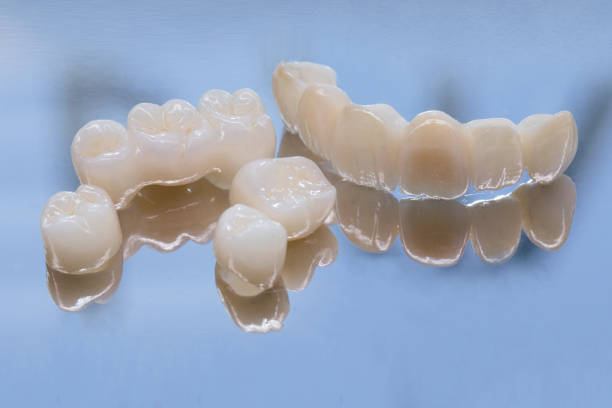
A damaged or missing tooth can affect more than the appearance of your smile. A weakened tooth may become difficult to chew with, while a missing tooth can leave an uncomfortable gap and allow neighboring teeth to shift over time.
Fortunately, modern restorative dentistry offers several ways to rebuild your smile. Two common options are dental crowns and bridges. Although both can restore the appearance and function of your teeth, they serve different purposes.
So, how do you know which restoration is right for you? When is a crown the better choice, and when does a bridge make more sense?
Dental crowns & bridges Houston patients receive are designed to address different dental concerns.
A dental crown is a custom-made restoration that covers a damaged or weakened tooth. It can restore the tooth's shape, strength, and appearance when a filling may not provide enough support.
A dental bridge, on the other hand, is designed to replace one or more missing teeth. It uses supporting teeth or dental implants to hold a replacement tooth or teeth in the open space.
Understanding this basic difference is the first step toward choosing the appropriate treatment.
A crown may be recommended when a tooth has significant decay, a large filling, a crack, or other structural damage. It can cover the remaining tooth and help restore its function.
Crowns may also be used after root canal treatment, depending on the condition and location of the tooth. The goal is to protect the remaining tooth structure while allowing you to bite and chew normally.
Yes. Modern crowns can be made from tooth-colored materials designed to blend with surrounding teeth. Depending on the location of the tooth and your needs, your dentist can recommend an appropriate material.
A missing tooth can create problems beyond the visible gap. Neighboring teeth may gradually move into the empty space, while chewing function can be affected.
A dental bridge can fill that space with a replacement tooth. Traditional bridges are generally supported by prepared neighboring teeth, while implant-supported bridges use dental implants for support.
A dentist in Greenspoint office Houston can examine the missing-tooth area and determine whether a bridge is appropriate based on the condition of your remaining teeth and supporting structures.